
OEM/ODM Options for Ultrasonic Cavitation Machines
- Choosing the Right Manufacturing Path for Body Contouring Devices
- What buyers really want
- How OEM and ODM differ at a glance
- Comparing OEM vs ODM for Ultrasonic Cavitation Machines
- Key commercial trade-offs
- Typical metrics: cost, lead time, MOQ
- Technical and Regulatory Considerations
- Key technical specifications to lock down
- Regulatory pathway and compliance
- Selecting the Right Manufacturing Partner
- Supplier evaluation checklist
- Intellectual property and contract terms
- Productization: From Prototype to Commercial Unit
- Design for manufacturability (DFM) and testing
- Clinical evidence and marketing claims
- OEM/ODM Cost Modeling and Budgeting
- Typical cost buckets
- Example budget model (indicative)
- Why Goodway is a Strategic OEM/ODM Partner
- Practical Next Steps & Checklist Before You Commit
- Pre-sourcing checklist
- Pilot production and quality gates
- FAQ
- 1. What is the difference between an OEM and an ODM for ultrasonic cavitation machines?
- 2. How long does it take to launch a custom ultrasonic cavitation machine?
- 3. What certifications should I require from the manufacturer?
- 4. What are the common risks when selecting an OEM/ODM partner?
- 5. Can I customize treatment parameters and user interface in an ODM product?
- 6. Do I need clinical trials to sell professional cavitation devices?
- Contact & Next Steps
- References
Choosing the Right Manufacturing Path for Body Contouring Devices
Brands seeking to launch the best professional ultrasonic cavitation machine must decide early between OEM and ODM manufacturing models. That decision affects product differentiation, time-to-market, cost structure, and regulatory burden. This guide explains the options, quantifies typical trade-offs, and gives practical steps to evaluate partners so you can confidently choose the route that matches Goodway strategy and commercial goals.
What buyers really want
Clinics and spas purchasing professional cavitation devices prioritize clinical efficacy, reliability, safety certifications (CE/FDA/ISO), service warranties, and clear training support. For B2B brands, these buyer expectations translate directly into product specifications and provider responsibilities.
How OEM and ODM differ at a glance
OEM (Original Equipment Manufacturer): the supplier builds to your design and spec, often under brand label. You control the product design, features, and IP (subject to supplier capabilities). ODM (Original Design Manufacturer): the supplier provides an existing design that you brand and may tweak. ODMs shorten R&D time and lower up-front design costs but limit differentiation.
Comparing OEM vs ODM for Ultrasonic Cavitation Machines
Key commercial trade-offs
Decisions are shaped by: desired level of customization, product differentiation, technical ownership, budget, and regulatory responsibility. Startups often choose ODM to reach market faster; established brands choose OEM to protect IP and deliver bespoke performance (e.g., targeted transducer configurations, power profiles, software UI).
Typical metrics: cost, lead time, MOQ
Below are industry-typical ranges for professional aesthetic devices (your partner may vary):
| Model | Customization | Typical MOQ | Lead Time (prototype → production) | Relative Cost |
|---|---|---|---|---|
| OEM (full design) | High — bespoke hardware, software, UI | 100–500 units | 3–9 months | Higher (design + tooling + testing) |
| ODM (existing design) | Low–Medium — branding, small feature tweaks | 50–300 units | 6–12 weeks (plus regulatory time) | Lower (no R&D or tooling) |
Source and typical ranges are based on industry procurement practices and supplier discussions (see references).
Technical and Regulatory Considerations
Key technical specifications to lock down
- Ultrasonic frequency(s) and power output: professional cavitation machines commonly operate in the 20–70 kHz range for mechanical cavitation effect; check transducer specs and power density.
- Transducer configuration: single-point vs multi-transducer arrays affect treatment time and coverage.
- Pulse mode and waveform control: adjustable pulse durations and duty cycles improve safety and treatment personalization.
- Cooling and patient-skin protection: integrated cooling or temperature sensors improve comfort and reduce risk.
- Software and user interface: preset protocols, manual override, and treatment logs are expected by clinical users.
Regulatory pathway and compliance
Professional aesthetic devices are regulated in many jurisdictions. Key compliance items to plan for:
- Safety testing: electrical safety (IEC 60601 series) and electromagnetic compatibility (EMC) testing are frequently required for medical/aesthetic devices.
- Quality management: ISO 13485 certification for device manufacturing is a major trust signal for international buyers.
- CE marking in Europe and country-specific registrations (e.g., medical device registration in each target market).
- FDA: if marketed in the United States, determine whether a 510(k) notification or other clearance is required depending on device claims. Consult local regulatory experts early.
Manufacturers that provide documentation support and pre-certified components significantly reduce your time-to-market and compliance risk.
Selecting the Right Manufacturing Partner
Supplier evaluation checklist
When vetting OEM/ODM partners for the best professional ultrasonic cavitation machine, evaluate the following:
- Manufacturing scale and capacity (workshop size, cleanroom status, production lines).
- R&D capabilities and in-house testing laboratory for acoustic/power verification.
- Quality systems (ISO 13485, 9001) and track record with international certifications.
- After-sales support: spare parts, training materials, warranty policy and field service coverage.
- References: existing brand partnerships and client case studies for similar devices.
Intellectual property and contract terms
Key legal/contract items to negotiate:
- IP ownership/assignment for design work (especially for OEM projects).
- Tooling ownership and lifecycle costs.
- Quality acceptance criteria, returns policy, and warranty obligations.
- Non-disclosure agreements and non-compete clauses where relevant.
Productization: From Prototype to Commercial Unit
Design for manufacturability (DFM) and testing
Early DFM reviews reduce cost overruns. Critical tests for ultrasonic cavitation units include acoustic output verification, thermal mapping, software validation, durability cycles, and user safety tests.
Clinical evidence and marketing claims
If you intend to market clinical efficacy, collect verifiable evidence. Options include published pilot studies, independent laboratory measurements (e.g., cavitation pressure mapping), or clinical trials. Even for non-medical aesthetic claims, transparent test data builds trust with clinics and end-users.
OEM/ODM Cost Modeling and Budgeting
Typical cost buckets
- R&D and prototype iterations (higher for OEM).
- Tooling and molds (electromechanical housings, handpieces).
- Component procurement (transducers, power supplies, sensors).
- Certification, lab testing, and regulatory filing fees.
- Shipping, duties, and inventory carrying cost.
Example budget model (indicative)
| Item | OEM (one-off product development) | ODM (rebranded existing) |
|---|---|---|
| Design & prototyping | $20,000–$80,000 | $2,000–$15,000 |
| Tooling & injection molds | $10,000–$50,000 | $5,000–$20,000 |
| Certification & testing | $10,000–$40,000 | $5,000–$20,000 |
| Unit cost (est., 500 units) | $800–$1,800 per unit | $450–$1,000 per unit |
Note: numbers are indicative. Actual budgets vary by region, supplier, and feature set. Always obtain detailed quotations and a BOM (bill of materials).
Why Goodway is a Strategic OEM/ODM Partner
Goodway is a leading manufacturer and supplier in the beauty instrument industry with over 15 years of experience. We cover an area of 42,000 square meters; we not only have a laser dust-free workshop but also have an 800-square-meter self-owned showroom; we provide OEM services for many international brands.
Goodway has been committed to product innovation and R&D. By continuously introducing advanced technologies and concepts, we have improved the functions and effects of beauty instruments, bringing users an unprecedented experience.
Goodway adheres to strict quality standards to ensure that each beauty instrument is made with exquisite craftsmanship and rigorous testing. With our professional team and comprehensive warranty coverage, we guarantee timely and reliable service to keep your beauty equipment at its best performance.
Our goal is to lead the industry trend and make every product a perfect combination of technology and beauty.
Goodway's core product lines and advantages include:
- Products: EMS sculpting machine, RF machine, laser hair removal machine, HIFU machine, pelvic floor devices, cryolipolysis machine, hydrafacial systems.
- Advantages: large-scale manufacturing, in-house R&D, clean production environment, showroom for demonstrations, proven OEM partnerships with international brands.
For manufacturers or brands looking for a partner to produce the best professional ultrasonic cavitation machine, Goodway offers end-to-end OEM and ODM services—from concept and prototyping to certification and after-sales support. Visit Goodway: https://www.gzgooodway.com/ to explore capabilities and request a consultation.
Practical Next Steps & Checklist Before You Commit
Pre-sourcing checklist
Before signing with an OEM/ODM, ensure you have:
- Clear product specification document (functional and non-functional).
- Target markets and a regulatory plan per jurisdiction.
- Initial budget and pricing model for channel partners.
- IP agreements and confidentiality protections in place.
- Service and warranty requirements mapped out.
Pilot production and quality gates
Negotiate pilot runs (e.g., 10–50 units) and acceptance tests: visual inspection, functional testing, safety compliance, and a small clinical usability pilot if required. Use these gates to validate supplier performance before full-scale production.
FAQ
1. What is the difference between an OEM and an ODM for ultrasonic cavitation machines?
OEM builds devices to your design and specifications, giving you greater control and IP ownership. ODM offers pre-designed products that you can brand and slightly modify, enabling faster time-to-market and lower up-front costs.
2. How long does it take to launch a custom ultrasonic cavitation machine?
Typical timelines: ODM rebranding can take 6–12 weeks (excluding regulatory approvals). A full OEM path with bespoke design, prototyping, and certification generally takes 3–9 months, depending on complexity and compliance requirements.
3. What certifications should I require from the manufacturer?
Request evidence of ISO 13485 (quality management), CE marking support for Europe, and evidence of compliance testing (IEC 60601 electrical safety and EMC). For US markets, clarify if FDA 510(k) or other filings are necessary for your claims.
4. What are the common risks when selecting an OEM/ODM partner?
Key risks include quality inconsistency, delayed deliveries, hidden tooling or component costs, insufficient documentation for regulatory filings, and unclear IP ownership. Mitigate with clear contracts, staged payments, and acceptance criteria.
5. Can I customize treatment parameters and user interface in an ODM product?
Many ODM suppliers offer parameter and UI customization within predefined limits (software skins, preset protocols, language packs). For deeper algorithmic or hardware changes, an OEM approach is usually required.
6. Do I need clinical trials to sell professional cavitation devices?
Clinical trials are not always mandatory for aesthetic devices, but documented performance tests and safety data are essential—especially if you make efficacy claims. Market-specific regulations determine requirements; consult regulatory experts early.
Contact & Next Steps
If you are evaluating OEM/ODM options for the best professional ultrasonic cavitation machine and want a reliable manufacturing partner with demonstrated industry experience, consider contacting Goodway to discuss requirements, request a quote, or schedule a factory visit. Visit: https://www.gzgooodway.com/
References
- Wikipedia — Cavitation (https://en.wikipedia.org/wiki/Cavitation). Accessed Jan 4, 2026.
- World Health Organization — Medical device regulations and safety resources (https://www.who.int/medical_devices). Accessed Jan 4, 2026.
- IEC 60601 standard overview — International Electrotechnical Commission (https://www.iec.ch/standards). Accessed Jan 4, 2026.
- ISO 13485 — Quality management systems — Medical devices (https://www.iso.org/standard/59752.). Accessed Jan 4, 2026.
- FDA — Medical Devices (https://www.fda.gov/medical-devices). Accessed Jan 4, 2026.
- Industry procurement guides and supplier benchmarking reports (public manufacturer disclosures and trade resources). Accessed Jan 4, 2026.
Wholesale Pricing and MOQ for Cavitation Machines
How to Choose the best body sculpting machine manufacturer and supplier ?
What are the application scenarios of cryolipolysis slimming machine?
Why choose Goodway as your ems body sculpting machine factory supplier
Treatment
Is laser acne removal safe for all skin types?
Yes, laser acne treatments are safe for all skin types. However, certain skin tones may require a specific type of laser to ensure optimal results. A consultation with our skincare specialist will help determine the best treatment option for your skin.
Is laser acne removal painful?
Most patients experience minimal discomfort during the treatment. You may feel a slight stinging sensation as the laser pulses are applied to the skin, but numbing creams can be used to minimize any discomfort. The treatment is generally well-tolerated.
Customization
Is this machine for home or personal use?
No. Our EMS sculpting machines are designed strictly for professional and commercial use.
What is the delivery time for customized equipment?
The delivery time typically depends on the complexity of the project and the order quantity. Generally, it takes 6 to 12 weeks from design confirmation to product delivery. The exact timeline will be negotiated with the client upon order confirmation.
Are the products subjected to quality testing?
All products undergo rigorous quality testing before leaving the factory, including durability, safety, and performance tests. We also provide international certifications such as CE, FDA, and ISO to ensure products meet global market standards.
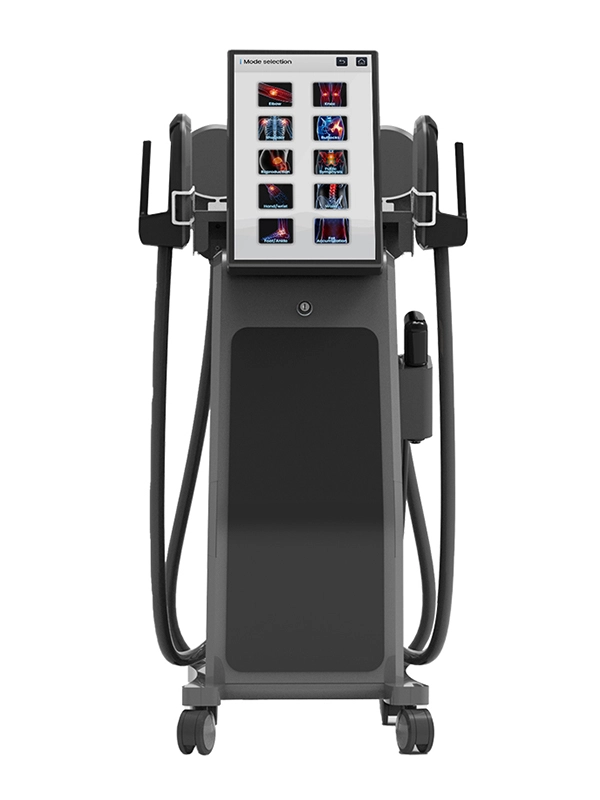
2 in 1 EMS Body sculpt machine cellulite treatment shockwave therapy EMS therapy device EMS machine for muscle stimulation
Goodway's 2-in-1 EMS Body Sculpt Machine utilizes shockwave therapy and EMS technology for effective cellulite reduction and muscle stimulation. This innovative device offers a combined approach to body sculpting, targeting both fat and muscle tone. Experience noticeable improvements with Goodway's advanced shockwave therapy machine.
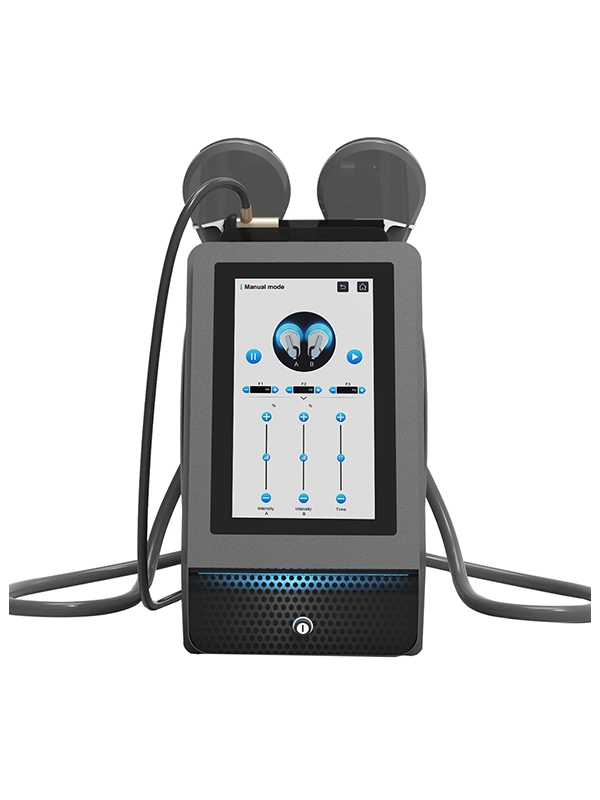
2 in 1 Best EMS beauty device shockwave therapy device body contouring shockwave ems muscle stimulator Machine
Goodway's Shockwave + MES Beauty Device is an advanced dual-therapy system combining shockwave technology for deep-tissue healing—reducing inflammation, relieving arthritis pain, and accelerating recovery—with MES electrostimulation to strengthen muscles without strain. This non-invasive, drug-free solution enhances mobility and rehabilitation, perfect for both clinical and home use.
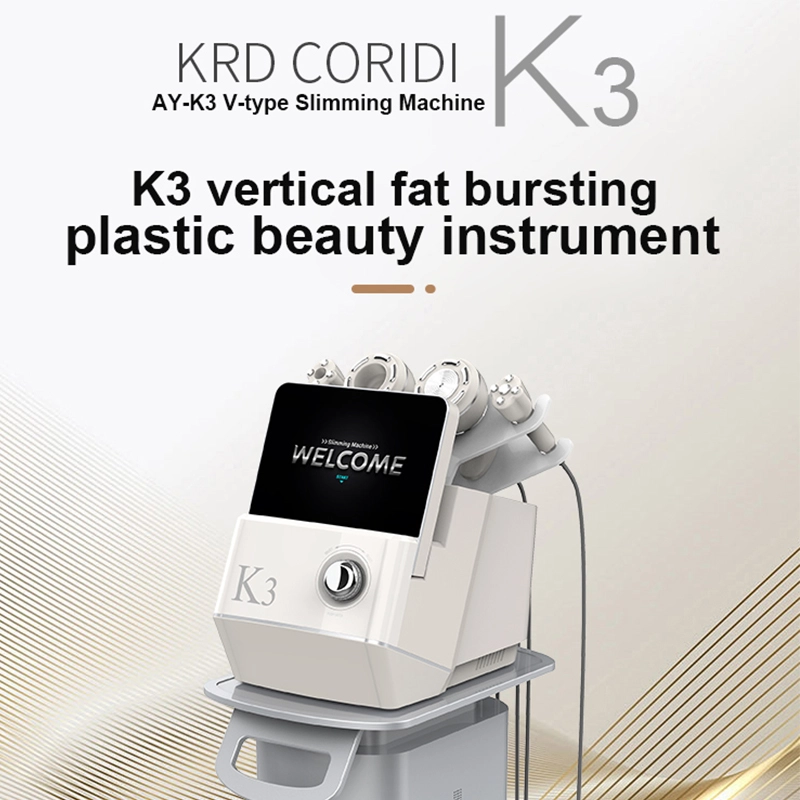
K3 Cavitation machine Achieve Effortless Fat Loss with Our Advanced massage machine
Experience the transformative power of the Goodway's K3 Cavitation Machine. This advanced massage machine targets stubborn fat effortlessly, doubling as an effective cellulite massager. Achieve your desired body contour with ease. Discover unparalleled fat loss results today.
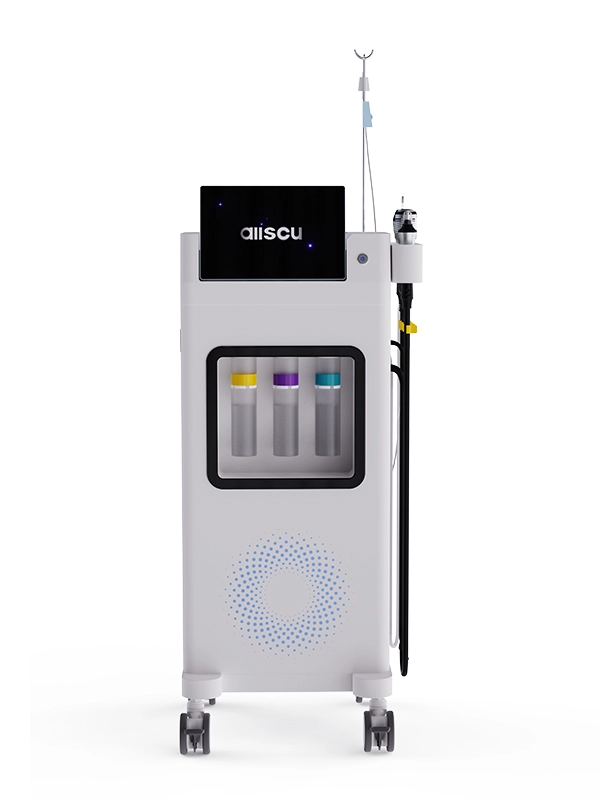
Professional Facial Spa Equipment Aqua Peel Facial Machine for Deep Cleansing and Hydration
Goodway's K8 Hydrafacial Machine is an all-in-one skin rejuvenation system that combines high-pressure deep cleansing, ice hammer pore tightening, plasma acne treatment, diamond microdermabrasion, and ultrasonic pore purification to remove impurities, reduce inflammation, and promote cell renewal—leaving skin smoother, brighter, and healthier.
 Scan QR Code
Instagram