
Shipping, Customs, and Import Tips for Cavitation Equipment
- Classifying and Certifying Cavitation Equipment for Import
- How to determine the correct HS code and product classification
- Regulatory conformity: CE, FCC, RoHS, and local rules
- Practical check: sample documentation you should have
- Shipping Modes, Transit Times, and Cost Trade-offs
- Air freight vs sea freight vs express courier
- Comparison table: typical shipping options
- When to choose DDP, DAP, FOB, or EXW
- Packaging, Labelling, and Handling for Cavitation Machines
- Packing to protect delicate electronics and transducers
- Labeling, serial numbers, and traceability requirements
- Packed dimensions for freight quotes and customs valuation
- Customs Clearance, Duties, and Cost Optimization
- Calculating duties and taxes
- Commercial invoice and valuation best practices
- Use a customs broker and pre-clearance to avoid surprises
- Special Considerations: Batteries, Consumables, and After-Sales
- Batteries and dangerous goods rules
- Consumables, gels, and chemical paperwork
- After-sales parts, warranty returns and spare stock management
- Actionable Importer Checklist
- FAQ
- 1. What HS code should I use for the best professional ultrasonic cavitation machine?
- 2. Do I need CE/FDA approval to import cavitation machines?
- 3. How do I avoid customs delays and extra charges?
- 4. Is it better to ship by air or sea for a clinic order?
- 5. What documentation is essential for regulatory and customs inspections?
- Contact & Next Steps
- References and authoritative resources
Importers and distributors searching for the best professional ultrasonic cavitation machine must balance product safety, regulatory compliance, and cost-effective logistics. This guide summarizes actionable steps—from choosing HS codes and Incoterms to packaging, documentation, and customs clearance—so your cavitation equipment shipments clear quickly, avoid fines, and reach customers in clinic-ready condition.
Classifying and Certifying Cavitation Equipment for Import
How to determine the correct HS code and product classification
Accurate classification starts by establishing the device function: is the unit marketed as a medical device, a cosmetic/beauty appliance, or general wellness equipment? Classification affects duties, required certifications, and import controls. Use authoritative tariff tools to search potential s (e.g., HS 9018 for medical appliances or s under 85/90 for electrical/instrument equipment) and then confirm with your local customs authority or a licensed customs broker before shipping.
Regulatory conformity: CE, FCC, RoHS, and local rules
For EU-bound shipments, CE marking (and potentially medical device directives/regulations if claiming medical use) is often required. For the U.S., electromagnetic compatibility and radio rules (if the unit contains RF) may require FCC testing; FDA oversight may apply if marketed for medical treatment. RoHS and WEEE can apply in some markets for electronic equipment. Always keep test reports, declarations of conformity, and technical files ready to present to customs or regulators on request.
Practical check: sample documentation you should have
Prepare: commercial invoice, detailed packing list, certificate of origin (if claiming preferential tariff), declaration of conformity (CE/FCC), safety and EMC test reports, user manual and labeling data, warranty/maintenance info, and MSDS if any consumables are hazardous. Keep originals and digitized copies for customs pre-clearance.
Shipping Modes, Transit Times, and Cost Trade-offs
Air freight vs sea freight vs express courier
Choice depends on urgency, value-density, and volume. Air freight and express couriers (DHL, FedEx, UPS) are faster and better for high-value, small-volume units (e.g., single best professional ultrasonic cavitation machine for a clinic). Ocean freight is cheaper for pallets or containers but slower and requires more lead time and port handling coordination.
Comparison table: typical shipping options
| Mode | Typical transit time | Cost per kg (relative) | Best for | Key risks |
|---|---|---|---|---|
| Express courier (DHL/FedEx/UPS) | 1–7 days | High | Samples, single units, urgent spare parts | Higher duty drawback complexity, cost |
| Air freight (commercial) | 2–10 days | Medium–High | Smaller shipments, moderate value | Airport-to-door consolidation, fuel surcharges |
| Sea freight (FCL/LCL) | 2–8 weeks | Low | Bulk orders, distributors, large orders | Longer lead time, port congestion, demurrage |
Data: carrier and industry guidance (see references).
When to choose DDP, DAP, FOB, or EXW
For first-time buyers, Delivered Duty Paid (DDP) minimizes surprises because the seller handles customs and duties. However, DDP shifts risks/costs to the seller and raises the price. DAP/FOB/EXW are used when buyers want control over local customs clearance or have trusted brokers. Use Incoterms deliberately and state them clearly on the commercial invoice and sales contract.
Packaging, Labelling, and Handling for Cavitation Machines
Packing to protect delicate electronics and transducers
Ultrasonic cavitation machines contain sensitive transducers, PCBs, and sometimes vacuum pumps—pack with foam inserts, double-boxing, anti-static wrap, and shock indicators if shipping high-value units. For sea freight, include moisture-absorbing desiccants and a vapor corrosion inhibitor (VCI) layer. Mark orientation and fragile labels on outer cartons.
Labeling, serial numbers, and traceability requirements
Labels should include model, serial number, manufacturer/importer name and address, country of origin, voltage/frequency, and safety markings (CE, FCC) as applicable. Accurate labels reduce customs queries and support warranty claims and after-sales service. For EU medical device rules, UDI/serial tracking may be required—verify for your product class.
Packed dimensions for freight quotes and customs valuation
Provide gross weight, net weight, and packed dimensions (L×W×H) for accurate freight quotes and to avoid re-weigh/inspection costs. For couriers, volumetric weight often determines price—optimize packing to reduce wasted cubic volume.
Customs Clearance, Duties, and Cost Optimization
Calculating duties and taxes
Duties depend on HS code, declared value, and applicable trade agreements. VAT/GST is often applied on CIF or DDP landed value including freight and insurance. Use local tariff lookups (e.g., HTS for the U.S., TARIC for EU) to estimate duties in advance. If you import frequently, consider Authorized Economic Operator (AEO) or similar programs to get faster clearance.
Commercial invoice and valuation best practices
A complete commercial invoice prevents delays: include seller/buyer details, itemized description with unit value, currency, INCOTERM, HS code (recommended), country of origin, net/gross weight, and invoice number/date. Undervaluing shipments to reduce duty is illegal and risks penalties.
Use a customs broker and pre-clearance to avoid surprises
Engage a licensed customs broker or freight forwarder experienced with medical/cosmetic devices in your target market. They can pre-screen documentation, classify goods accurately, and advise on preferential origin claims. For high-value or regulated consignments, pre-clearance reduces detention risk and storage charges.
Special Considerations: Batteries, Consumables, and After-Sales
Batteries and dangerous goods rules
If your cavitation machine includes lithium-ion batteries or external battery packs (common in portable units), transport rules under IATA Dangerous Goods Regulations apply—special packaging, labeling, and carrier acceptance rules are required. In some cases, shipments must travel as cargo on passenger aircraft restrictions or be declared as dangerous goods.
Consumables, gels, and chemical paperwork
Ultrasound gels or topical solutions can be classified as hazardous if flammable or containing restricted substances. Provide MSDS/SDS and check local chemical import requirements. If your product includes disposables (filters, probes), list them separately on commercial documents to simplify customs review.
After-sales parts, warranty returns and spare stock management
Plan logistics for spare parts and returns: use bonded warehouses or temporary import (ATA Carnet where applicable) to reduce duty on parts used for repair. For warranty returns, mark documents clearly as repair/return and follow local customs rules to avoid paying duties twice.
Actionable Importer Checklist
- Confirm intended product classification (medical vs cosmetic). Consult local regulator if in doubt.
- Obtain conformity documents before shipment (CE/FCC/test reports).
- Choose Incoterm based on buyer/seller capability (DDP for low-risk buyer experience).
- Use appropriate packing (foam, double-box, desiccant) and label accurately.
- Provide a complete commercial invoice with HS code recommendation and COO.
- Engage a customs broker experienced in medical/cosmetic equipment.
- Account for potential DG (batteries) or chemical (gels) paperwork needs.
- Secure insurance that covers theft, damage, and delay (all-risks policy).
FAQ
1. What HS code should I use for the best professional ultrasonic cavitation machine?
There is no single universal HS code—common s used are under 9018 (medical instruments) or sections for electrical appliances. Always verify with your national tariff schedule or customs broker and provide a detailed product description and technical specs when queried.
2. Do I need CE/FDA approval to import cavitation machines?
CE marking is required in the EU if the product falls under relevant directives (e.g., medical devices). FDA regulates medical devices in the U.S.; if you market the device for medical treatment, registration or premarket submissions may be necessary. If marketed strictly as cosmetic/wellness, different rules may apply. Consult local regulators for classification.
3. How do I avoid customs delays and extra charges?
Provide complete documentation, accurate HS codes and values, work with experienced brokers, and consider DDP for first shipments. Pre-clearance and submitting digital copies ahead of arrival reduce hold-ups. Also, avoid ambiguous product descriptions like beauty device—use precise model/spec descriptions.
4. Is it better to ship by air or sea for a clinic order?
For single or small orders of high-value cavitation machines, express courier or air freight is typically better—faster and reduces in-transit damage risk. For bulk orders or distributor restocks, sea freight (FCL/LCL) is more cost-effective despite longer transit time.
5. What documentation is essential for regulatory and customs inspections?
Commercial invoice, packing list, bill of lading/air waybill, certificate of origin, conformity declarations (CE/FCC), test reports, user manual, and MSDS for any chemicals. Maintain both original and electronic copies for rapid submission.
Contact & Next Steps
If you are sourcing or importing the best professional ultrasonic cavitation machine and want tailor-made logistics, compliance checks, or certified units, contact our export/import team to get a free landed-cost quote and compliance review. View our certified product range and request samples or a commercial proposal today.
References and authoritative resources
- United States Harmonized Tariff Schedule (HTS) - USITC (accessed 2026-01-12)
- EU TARIC consultation - European Commission (accessed 2026-01-12)
- World Customs Organization (WCO) (accessed 2026-01-12)
- U.S. FDA - Medical Devices (accessed 2026-01-12)
- IATA Dangerous Goods Regulations (Lithium Batteries) (accessed 2026-01-12)
- DHL - Healthcare & Life Sciences Logistics (accessed 2026-01-12)
- FedEx - Medical & Healthcare Shipping Solutions (accessed 2026-01-12)
- ISO 13485 - Medical devices — Quality management systems (accessed 2026-01-12)
Data and guidance in this article are current as of the access dates above. For binding advice, always consult local customs authorities, regulators, and licensed customs brokers prior to shipment.
Why choose Goodway as your profound rf machine supplier
Top 10 cavitation machine amazon Manufacturers and Supplier Brands in UK
Top 10 lipo laser cavitation machine Manufacturers and Supplier Brands
Can You Buy a CoolSculpting Machine for Home Use? The Truth About At-Home Fat Freezing
Customization
What is the delivery time for customized equipment?
The delivery time typically depends on the complexity of the project and the order quantity. Generally, it takes 6 to 12 weeks from design confirmation to product delivery. The exact timeline will be negotiated with the client upon order confirmation.
What is your minimum order quantity (MOQ)?
MOQ depends on customization level. Contact us for project-based evaluation.
Treatment
Will there be any downtime after the treatment?
One of the benefits of laser acne removal is that it requires little to no downtime. You may experience some mild redness or swelling immediately after the procedure, but this usually subsides within a few hours. Most patients can return to their regular activities right away.
Is laser acne removal painful?
Most patients experience minimal discomfort during the treatment. You may feel a slight stinging sensation as the laser pulses are applied to the skin, but numbing creams can be used to minimize any discomfort. The treatment is generally well-tolerated.
Are the results permanent?
Laser acne treatments can provide long-lasting results, but acne may reoccur due to factors such as hormonal changes, diet, or stress. Maintenance treatments may be recommended to keep your skin clear and acne-free.
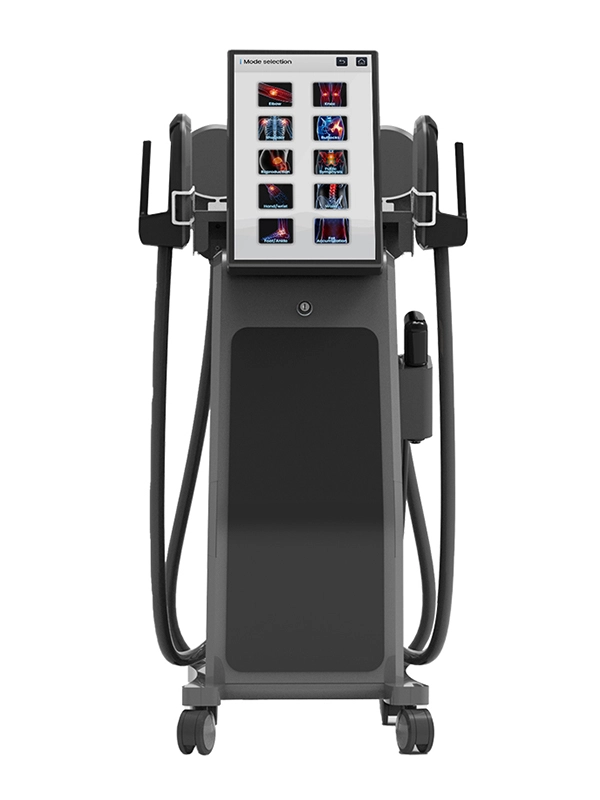
2 in 1 EMS Body sculpt machine cellulite treatment shockwave therapy EMS therapy device EMS machine for muscle stimulation
Goodway's 2-in-1 EMS Body Sculpt Machine utilizes shockwave therapy and EMS technology for effective cellulite reduction and muscle stimulation. This innovative device offers a combined approach to body sculpting, targeting both fat and muscle tone. Experience noticeable improvements with Goodway's advanced shockwave therapy machine.
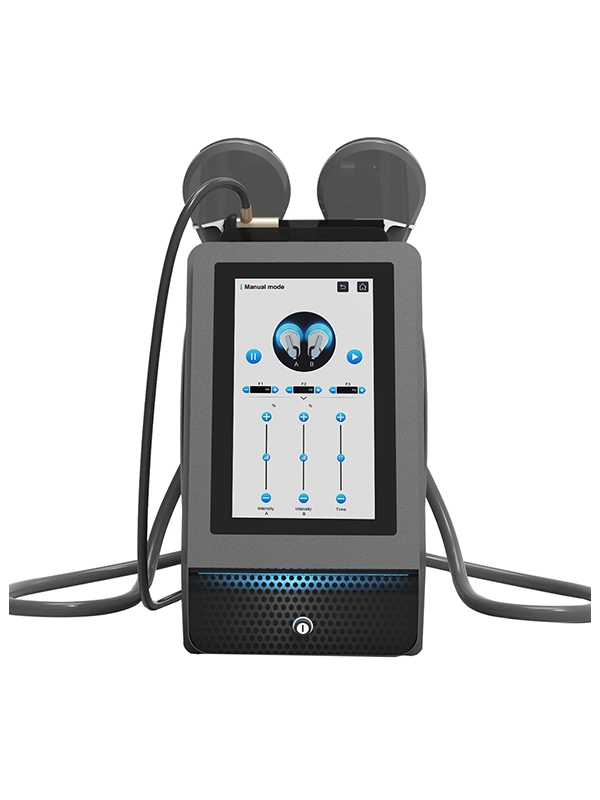
2 in 1 Best EMS beauty device shockwave therapy device body contouring shockwave ems muscle stimulator Machine
Goodway's Shockwave + MES Beauty Device is an advanced dual-therapy system combining shockwave technology for deep-tissue healing—reducing inflammation, relieving arthritis pain, and accelerating recovery—with MES electrostimulation to strengthen muscles without strain. This non-invasive, drug-free solution enhances mobility and rehabilitation, perfect for both clinical and home use.

K3 Cavitation machine Achieve Effortless Fat Loss with Our Advanced massage machine
Experience the transformative power of the Goodway's K3 Cavitation Machine. This advanced massage machine targets stubborn fat effortlessly, doubling as an effective cellulite massager. Achieve your desired body contour with ease. Discover unparalleled fat loss results today.
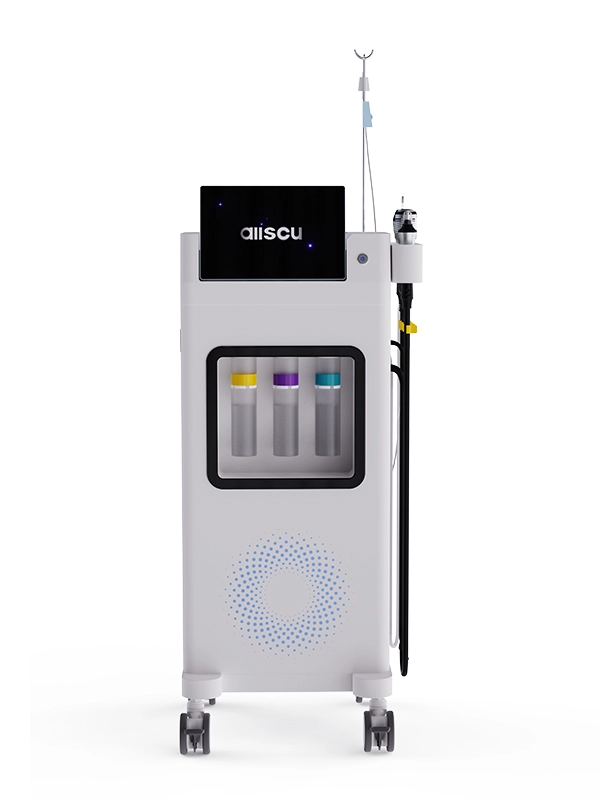
Professional Facial Spa Equipment Aqua Peel Facial Machine for Deep Cleansing and Hydration
Goodway's K8 Hydrafacial Machine is an all-in-one skin rejuvenation system that combines high-pressure deep cleansing, ice hammer pore tightening, plasma acne treatment, diamond microdermabrasion, and ultrasonic pore purification to remove impurities, reduce inflammation, and promote cell renewal—leaving skin smoother, brighter, and healthier.
 Scan QR Code
Instagram