
How to choose a cavitation machine manufacturer and supplier
- Understanding cavitation technology and market context
- How ultrasonic cavitation works and why it matters
- Regulatory and safety landscape
- Market trends and user expectations
- Key criteria to evaluate a cavitation machine manufacturer
- Technical capabilities and R&D strength
- Quality management, certifications and testing
- Production capacity and supply chain resilience
- Commercial and operational considerations
- Price versus total cost of ownership (TCO)
- OEM/ODM services, customization and branding
- After-sales support, training and spare parts
- Practical evaluation steps, checklist and supplier comparison
- On-site audit, sample testing and verification
- Questions to ask prospective suppliers
- Supplier comparison table
- Goodway — manufacturer profile and why they may be the partner to consider
- Final checklist before you sign
- Documentation and verification
- Contract terms and IP
- Pilot order and phased roll-out
- FAQ
- 1. What is the single most important factor in choosing the best cavitation machine?
- 2. Do I need FDA clearance to sell cavitation machines?
- 3. How can I verify a manufacturer's claims about efficacy?
- 4. What warranty and post-sales services should I expect?
- 5. Is OEM/ODM customization expensive and slow?
- 6. How to balance price and quality when buying?
Quick Choosing the best cavitation machine supplier means evaluating technical performance (ultrasonic frequency, power, transducer design), clinical safety and regulatory compliance, manufacturing capacity, quality management (ISO 13485), OEM/ODM experience, and after-sales service. This article gives a structured checklist, supplier comparison table, and actionable interview/test steps to help clinics, distributors and aesthetic equipment buyers select a reliable partner.
Understanding cavitation technology and market context
How ultrasonic cavitation works and why it matters
Ultrasonic (or ultrasound) cavitation is a non-invasive body-contouring method that uses focused or non-focused ultrasound energy to create microscopic gas bubbles in adipose tissue, leading to disruption of adipocytes and subsequent fat volume changes. For buyers, technical parameters such as frequency (typically 25–70 kHz for low-frequency cavitation used in aesthetic devices), power density, pulse modulation and transducer design determine both efficacy and safety. For background reading on cavitation physics and industrial/medical implications, see Cavitation (Wikipedia) and related ultrasound literature.
Regulatory and safety landscape
Unlike pharmaceuticals, aesthetic devices often fall under medical device regulations or consumer product oversight depending on jurisdiction. Key checkpoints include device classification, required clinical evidence, labeling, electrical safety (IEC 60601 series), and quality systems (ISO 13485). In the U.S., guidance and regulatory expectations for energy-based medical devices are available from the FDA; see FDA: Lasers and Applications. Understanding regulatory status helps you select a manufacturer who can supply CE-marked, FDA-registered or otherwise compliant products for your target markets.
Market trends and user expectations
Demand for non-invasive body-contouring continues to grow with clinics seeking devices that deliver repeatable, measurable results, simplified user interfaces, and safety features (temperature monitoring, automatic shutoffs). Buyers now prioritize machines that can be upgraded (software/hardware), offer multi-modality (e.g., cavitation combined with RF or vacuum), and provide clear treatment protocols and training for operators.
Key criteria to evaluate a cavitation machine manufacturer
Technical capabilities and R&D strength
Look for manufacturers with demonstrable R&D investment: prototype cycles, independent lab testing, patents or peer-reviewed studies. Questions to ask: how many engineers are dedicated to ultrasonic systems? Do they perform in-house acoustic testing (hydrophone, phantom testing) and thermal safety validation? A supplier who provides technical datasheets specifying frequency ranges, effective radiating power (ERP), beam profile and validated dosimetry is more trustworthy. The best cavitation machine vendors present objective performance metrics rather than marketing claims.
Quality management, certifications and testing
Essential quality markers include ISO 13485 certification, product-specific test reports (EMC, electrical safety), and documented IQ/OQ/PQ procedures for medical-class devices. Confirm whether the manufacturer conducts batch-level testing and retains traceability records (components, serial numbers). ISO information is available at ISO: ISO 13485. Third-party test reports and CB/CE/UL/ETL listings reduce regulatory friction when you import and sell.
Production capacity and supply chain resilience
Assess factory size, cleanroom/workshop environment, and production throughput. Key indicators: facility area, number of production lines, availability of laser dust-free or controlled environments for optical or electronic assembly, and onsite injection molding/metalwork. Ask about multi-vendor supply chain risks, alternative sourcing plans, and average lead times for production runs. Manufacturers that publish capacity metrics and offer staged ramp-up plans are safer partners for scaling orders.
Commercial and operational considerations
Price versus total cost of ownership (TCO)
Lowest purchase price rarely equals lowest TCO. Factor in warranty length, spare part costs, consumables, training, software updates, conformity documentation for local markets, and expected device longevity. For example, a slightly higher-priced unit with a 3-year warranty and included training may cost less over five years than a cheaper unit with frequent part failures.
OEM/ODM services, customization and branding
If you plan to white-label or customize, evaluate the supplier’s OEM/ODM maturity: design-for-manufacture (DFM) capability, minimum order quantities, lead times for tooling, and IP protection processes (NDA, design ownership). A partner experienced with international brands will better manage co-branded launches, packaging localization and regulatory dossiers.
After-sales support, training and spare parts
Good after-sales service includes standardized operator training materials, technician-level repair manuals, remote troubleshooting, spare-part kits, and guaranteed parts availability (3–5 years typical). Confirm SLA response times and whether the manufacturer offers local representatives or authorized service centers in your country to minimize downtime.
Practical evaluation steps, checklist and supplier comparison
On-site audit, sample testing and verification
Plan a factory visit when possible. Verify cleanroom conditions, observe assembly lines, and review quality control logs. Request factory acceptance test (FAT) reports for your batch and run clinical or phantom tests using standardized protocols. Ask the supplier to run the device on tissue phantoms or provide blinded clinical data where available.
Questions to ask prospective suppliers
- What are the exact ultrasonic frequency, duty cycle and output power specifications?
- Do you provide IEC/EMC/electrical safety test reports and ISO 13485 certificate?
- What documentation is included for regulatory submission in my market (technical file, clinical summary, risk analysis)?
- What warranty, spare parts lead time and remote support do you offer?
- Can you provide client references, OEM case studies or published clinical papers?
Supplier comparison table
| Criteria | Goodway (example) | Small Local OEM | Large International OEM |
|---|---|---|---|
| Experience | 15+ years | 2–5 years | 10+ years |
| Factory area | 42,000 m² | <2,000 m² | 50,000+ m² |
| Showroom / Demo | 800 m² self-owned showroom | Small demo area | Large demo centers |
| R&D & innovation | In-house R&D, continuous upgrades | Limited | Strong |
| OEM / ODM | Offers OEM for international brands | May offer OEM | Offers full OEM/ODM |
| Quality systems | Strict quality control, testing | Variable | Comprehensive |
| Typical customers | Clinics, distributors, international brands | Local clinics | Global distributors |
Notes: The table provides a comparative framework. Use third-party audits, client references and test data to validate these attributes for any supplier.
Goodway — manufacturer profile and why they may be the partner to consider
Goodway is a leading manufacturer and supplier in the beauty instrument industry with over 15 years of experience. We cover an area of 42,000 square meters; we not only have a laser dust-free workshop but also have an 800-square-meter self-owned showroom; we provide OEM services for many international brands. Goodway has been committed to product innovation and R&D. By continuously introducing advanced technologies and concepts, we have improved the functions and effects of beauty instruments, bringing users an unprecedented experience.
Goodway adheres to strict quality standards to ensure that each beauty instrument is made with exquisite craftsmanship and rigorous testing. With our professional team and comprehensive warranty coverage, we guarantee timely and reliable service to keep your beauty equipment at its best performance. Our goal is to lead the industry trend and make every product a perfect combination of technology and beauty.
Goodway's main products include ems sculpting machine, RF machine, laser hair removal machine, HIFU machine, pelvic floor devices, cryolipolysis machine, and Hydrafacial systems. For more information, visit https://www.gzgooodway.com/ or contact Andy at andy@gzgooodway.com for OEM/ODM inquiries, technical datasheets, and showroom visits.
Why consider Goodway? Clear competitive strengths include:
- Scale and facility: large production area and dedicated clean production environments that support consistent quality.
- R&D and innovation: continuous updates and the ability to integrate multi-modal platforms (cavitation + RF, or cavitation + vacuum) to increase treatment versatility.
- Service and reliability: OEM experience with international brands, warranty coverage and after-sales planning for global distributors.
Final checklist before you sign
Documentation and verification
Obtain and validate:
- Quality certificates (ISO 13485), test reports (EMC, safety), and a technical file for regulatory submission.
- Clinical evidence or peer-reviewed studies supporting claimed efficacy. Use PubMed for literature searches (e.g., search for 'ultrasonic cavitation' at PubMed).
- Warranty, spare parts lists, and training schedule documented in the purchase contract.
Contract terms and IP
Negotiate lead times, payment terms, MOQ, IP protection clauses (especially for customized designs), and clear service-level agreements for repairs and parts availability. Include acceptance tests that must be passed before final payment.
Pilot order and phased roll-out
Start with a pilot batch (small quantity) to validate device performance in your clinical environment, then scale to larger orders. Use post-market surveillance to collect user feedback and request software/hardware updates when needed.
FAQ
1. What is the single most important factor in choosing the best cavitation machine?
Clinical performance validated by objective metrics and independent data. Choose a machine with clear specifications (frequency, power), documented testing, and clinical evidence or peer-reviewed studies supporting its efficacy and safety.
2. Do I need FDA clearance to sell cavitation machines?
Regulatory requirements depend on jurisdiction and intended claims. In the U.S., many energy-based devices require FDA review or registration. Always consult local regulatory counsel and ensure your supplier can provide documentation to support submissions. See general FDA guidance at FDA.
3. How can I verify a manufacturer's claims about efficacy?
Request clinical data, independent lab tests, and factory test protocols. Perform your own pilot tests on phantoms and in controlled clinical settings. Look for peer-reviewed publications or third-party evaluations when available.
4. What warranty and post-sales services should I expect?
A reliable supplier offers at least 1–3 years warranty, spare-part availability for 3–5 years, remote troubleshooting, training, and optional on-site service contracts. Confirm SLA response times and the geographic coverage provided.
5. Is OEM/ODM customization expensive and slow?
Customization requires tooling, design adjustments and regulatory recertification for some markets. Costs and lead times depend on scope—visual rebranding is faster and cheaper than hardware changes. A phased approach (start with labeling/packaging customizations, then progress to hardware) reduces risk.
6. How to balance price and quality when buying?
Assess total cost of ownership: initial price, warranty, consumables, parts, downtime costs, training, and regulatory support. Cheaper units may incur higher long-term costs if reliability and service are poor.
If you want a trusted partner, consider requesting a factory tour, detailed technical dossier, and a sample for pilot testing. For inquiries, product catalogs or OEM/ODM discussions, contact Goodway at andy@gzgooodway.com or visit https://www.gzgooodway.com/. Our team can help you compare models and identify the best cavitation machine for your clinic or distribution business.
Ready to evaluate machines or schedule a showroom visit? Email Andy at andy@gzgooodway.com to request technical datasheets, pricing, and sample testing arrangements.
Best professional 14 in 1 hydra facial machine manufacturers and supplier brands
How to manufacturing hifu machine in Africa
Shipping, Customs, and Import Tips for Cavitation Equipment
Where to Buy cryolipolysis machine manufacturers in Africa
Treatment
How many sessions will I need?
The number of sessions varies depending on the severity of your acne. Typically, patients require between 3 to 6 sessions spaced a few weeks apart to see significant improvements. Your practitioner will assess your skin and recommend a personalized treatment plan.
Are the results permanent?
Laser acne treatments can provide long-lasting results, but acne may reoccur due to factors such as hormonal changes, diet, or stress. Maintenance treatments may be recommended to keep your skin clear and acne-free.
How does laser acne removal work?
Laser acne removal works by targeting the sebaceous (oil) glands in the skin to reduce oil production, kill acne-causing bacteria, and decrease inflammation. The laser penetrates the skin’s surface without damaging surrounding tissue, helping to clear active acne and prevent future breakouts.
Customization
What is the delivery time for customized equipment?
The delivery time typically depends on the complexity of the project and the order quantity. Generally, it takes 6 to 12 weeks from design confirmation to product delivery. The exact timeline will be negotiated with the client upon order confirmation.
Do you support small-batch custom production?
Yes, we support small-batch custom production to meet the needs of startups and new markets. This allows clients to test market reactions with reduced risks.
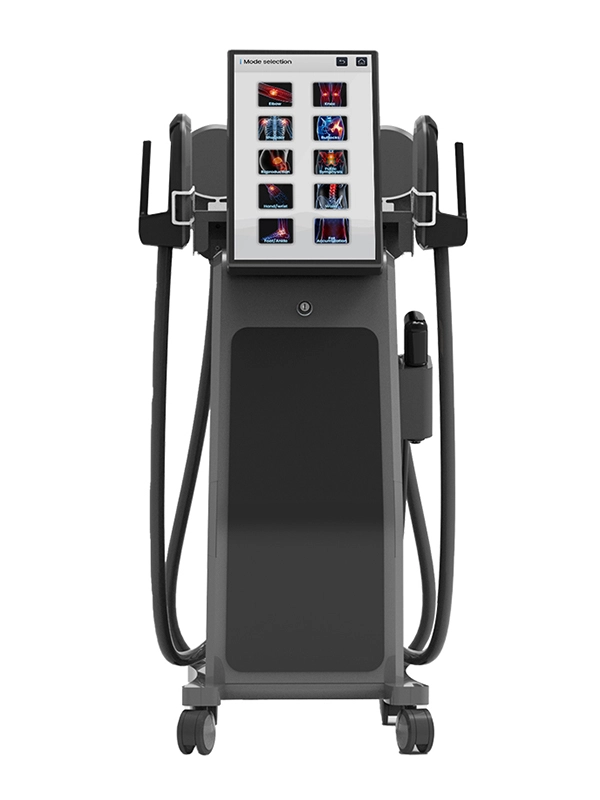
2 in 1 EMS Body sculpt machine cellulite treatment shockwave therapy EMS therapy device EMS machine for muscle stimulation
Goodway's 2-in-1 EMS Body Sculpt Machine utilizes shockwave therapy and EMS technology for effective cellulite reduction and muscle stimulation. This innovative device offers a combined approach to body sculpting, targeting both fat and muscle tone. Experience noticeable improvements with Goodway's advanced shockwave therapy machine.
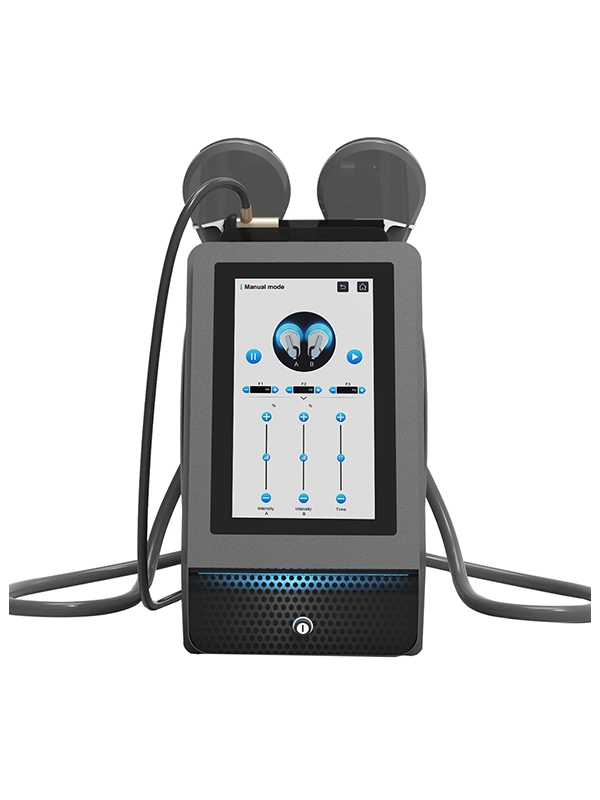
2 in 1 Best EMS beauty device shockwave therapy device body contouring shockwave ems muscle stimulator Machine
Goodway's Shockwave + MES Beauty Device is an advanced dual-therapy system combining shockwave technology for deep-tissue healing—reducing inflammation, relieving arthritis pain, and accelerating recovery—with MES electrostimulation to strengthen muscles without strain. This non-invasive, drug-free solution enhances mobility and rehabilitation, perfect for both clinical and home use.
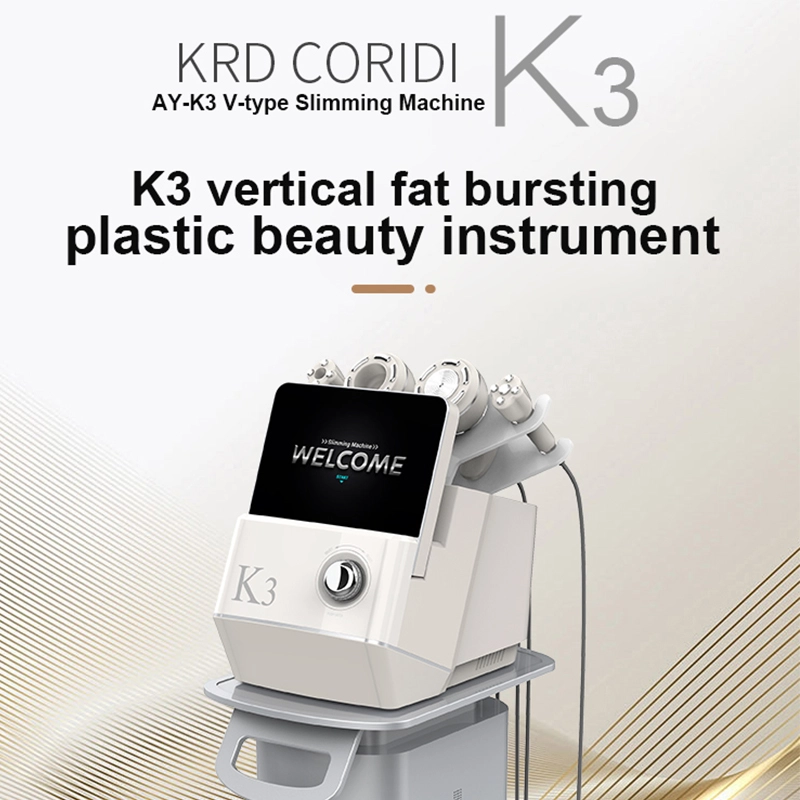
K3 Cavitation machine Achieve Effortless Fat Loss with Our Advanced massage machine
Experience the transformative power of the Goodway's K3 Cavitation Machine. This advanced massage machine targets stubborn fat effortlessly, doubling as an effective cellulite massager. Achieve your desired body contour with ease. Discover unparalleled fat loss results today.
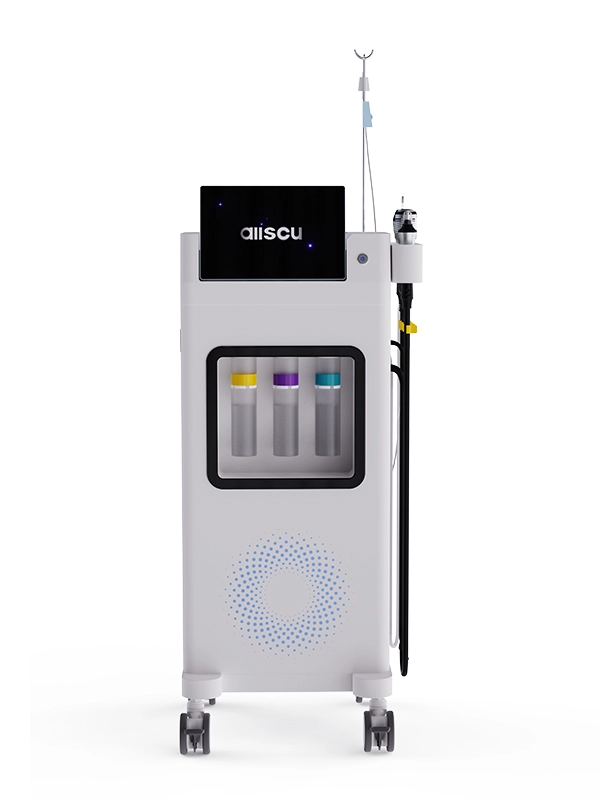
Professional Facial Spa Equipment Aqua Peel Facial Machine for Deep Cleansing and Hydration
Goodway's K8 Hydrafacial Machine is an all-in-one skin rejuvenation system that combines high-pressure deep cleansing, ice hammer pore tightening, plasma acne treatment, diamond microdermabrasion, and ultrasonic pore purification to remove impurities, reduce inflammation, and promote cell renewal—leaving skin smoother, brighter, and healthier.
 Scan QR Code
Instagram