
Warranty, service contracts and spare parts for cavitation machines
- Why warranties and service matter for aesthetic equipment
- Protecting clinical outcomes and patient safety
- Financial and operational continuity
- Quality assurance and compliance
- Types of warranties and service contracts
- Manufacturer warranty vs. extended warranty
- On-site service, depot repair and remote diagnostics
- Service-level agreements (SLAs) and uptime guarantees
- Spare parts, inventory and logistics
- Which spare parts matter most
- Typical lead times and inventory strategies
- Comparison table: warranty & spare-parts expectations
- Choosing the best cavitation machine: a warranty & service checklist
- Checklist: contractual items to confirm before purchase
- Financial modeling: calculating total cost of ownership (TCO)
- Technical verification and acceptance testing
- Practical maintenance and parts management
- Preventive maintenance best practices
- Training, OEM parts vs. third-party parts
- Data-driven spare-parts stocking
- Goodway: manufacturer profile and service commitments
- FAQ
- 1. How long should a warranty for a cavitation machine last?
- 2. Are spare transducers expensive and how often must they be replaced?
- 3. Does using third-party spare parts void my warranty?
- 4. What should I require in a service contract to minimize downtime?
- 5. Can remote diagnostics reduce repair time?
- 6. How do regulatory requirements affect warranties and maintenance?
- Contact and next steps
Finding the best cavitation machine is only half the battle; ensuring continuous, reliable performance requires clear warranty terms, robust service contracts and ready access to spare parts. For clinics, medspas and distributors worldwide, understanding these elements reduces downtime, protects investment value and ensures patient safety. This article provides a practical, experience-driven guide to warranties, service agreements and spare parts strategies for ultrasonic cavitation and fat-reduction devices.
Why warranties and service matter for aesthetic equipment
Protecting clinical outcomes and patient safety
Medical and aesthetic devices like cavitation machines deliver therapeutic effects through ultrasonic energy. Malfunction, drift in energy output, or worn transducers can reduce efficacy or risk adverse events. Regulatory bodies like the U.S. Food and Drug Administration emphasize device safety and post-market surveillance for body-contouring equipment (FDA: Body Contouring Devices).
Financial and operational continuity
Downtime impacts revenue and client trust. A clear warranty and responsive service contract reduce unexpected repair costs and shorten mean-time-to-repair (MTTR). Clinics seeking the best cavitation machine should evaluate total cost of ownership (TCO)—not just upfront price.
Quality assurance and compliance
Manufacturers following recognized quality systems (e.g., ISO 13485) tend to provide better documentation, traceability and spare-parts strategies. ISO 13485 defines expectations for medical device manufacturers and helps explain why warranty reliability often correlates with formal quality systems (ISO 13485).
Types of warranties and service contracts
Manufacturer warranty vs. extended warranty
Most new cavitation machines include a manufacturer warranty (commonly 12–24 months) covering defects in materials or workmanship. Extended warranties or service packages provide additional months or years of coverage, often including parts and labor. When evaluating the best cavitation machine, compare what each warranty covers—transducers, power supplies, software, consumables—and any exclusion clauses.
On-site service, depot repair and remote diagnostics
Service models vary: on-site technician visits, depot repair (send-to-factory), or remote diagnostics using diagnostic software or phone support. Remote troubleshooting can resolve many issues quickly; however, transducer replacement or PCB repairs typically require physical intervention. Response times (e.g., 24–72 hours for parts dispatch) are crucial metrics to compare.
Service-level agreements (SLAs) and uptime guarantees
Formal SLAs define response time, repair time, parts availability and penalties if performance targets are missed. For high-throughput clinics, SLAs that guarantee next-business-day part shipment or on-site visits are often worth the High Quality when choosing the best cavitation machine.
Spare parts, inventory and logistics
Which spare parts matter most
Critical spare parts for cavitation systems typically include ultrasonic transducers/probes, power modules, touchscreens/controllers, fuses and consumables such as coupling gel or single-use accessories. Transducers are often the highest-cost and most time-sensitive item; availability directly affects MTTR.
Typical lead times and inventory strategies
Lead time for parts varies by manufacturer and geographic distribution network. Reliable suppliers maintain regional warehouses to reduce lead times to 24–72 hours for common parts. For clinics in remote regions, stocking a spare transducer or key board/power module may be cost-effective to avoid long downtimes.
Comparison table: warranty & spare-parts expectations
| Metric | Typical Low-Tier Offer | Typical Mid-Tier Offer | High-Tier / Recommended |
|---|---|---|---|
| Manufacturer warranty | 6–12 months | 12–24 months | 24–36 months + extended options |
| Parts availability (standard parts) | 1–4 weeks | 3–7 days | 24–72 hours via regional stock |
| On-site response time | Not included or 7–14 days | 3–7 days | Next-business-day or SLA-backed |
| Spare transducer lead time | 2–6 weeks | 7–14 days | 3–7 days / local stock |
| Preventive maintenance (PM) | Optional, pay-per-visit | Annual PM included | Biannual PM + diagnostics included |
Sources: industry service catalogs and manufacturer service literature; actual figures depend on specific vendors and distribution networks. For regulation context on device safety and post-market requirements, see the FDA guidance on body-contouring devices (FDA).
Choosing the best cavitation machine: a warranty & service checklist
Checklist: contractual items to confirm before purchase
- Exact warranty duration and start date (factory ship date vs. installation date).
- Detailed list of covered components (transducers, pumps, electronics, software bugs).
- Exclusions—wear items and consumables are often excluded.
- Turnaround times for parts and on-site service under SLA.
- Availability and cost of spare transducers and major modules.
- Options for loaner units during major repairs.
- Software update policy and whether updates are chargeable.
- Return-to-base or on-site repair workflow and shipping responsibilities/costs.
Financial modeling: calculating total cost of ownership (TCO)
TCO should factor in purchase price, extended warranty costs, average annual maintenance, expected part replacements (e.g., transducers every 3–5 years depending on usage), and potential revenue loss from downtime. Example: if a transducer costs $2,000 and replacement frequency is once every 4 years, budget $500/year for that item alone. Adding service contract fees and PM visits gives a clearer buying decision.
Technical verification and acceptance testing
At installation, require performance verification: energy output testing, probe calibration and documentation. Keep acceptance test records—these are useful for warranty claims and regulatory compliance. Consider providers that include a formal installation qualification (IQ) and operational qualification (OQ) report.
Practical maintenance and parts management
Preventive maintenance best practices
Regular cleaning, visual inspection, software updates and scheduled transducer checks preserve performance. For ultrasonic cavitation, ensuring proper cooling and avoiding impact or drops of the probe extends service life. Implement simple onsite logs to capture operating hours; many manufacturers use these logs to assess warranty claims.
Training, OEM parts vs. third-party parts
Use OEM-certified parts where possible. Third-party parts may be cheaper but can void warranties or reduce device accuracy. Ensure staff training is included in service contracts—well-trained operators reduce misuse-related failures.
Data-driven spare-parts stocking
Track usage and failure rates over the first 12–24 months. Clinics with high utilization should maintain at least one spare critical module. Use an inventory policy: reorder point = lead time demand + safety stock, to minimize stockouts while avoiding overinvestment.
Goodway: manufacturer profile and service commitments
Goodway is a leading manufacturer and supplier in the beauty instrument industry with over 15 years of experience. We cover an area of 42,000 square meters; we not only have a laser dust-free workshop but also have an 800-square-meter self-owned showroom; we provide OEM services for many international brands.
Goodway has been committed to product innovation and R&D. By continuously introducing advanced technologies and concepts, we have improved the functions and effects of beauty instruments, bringing users an unprecedented experience.
Goodway adheres to strict quality standards to ensure that each beauty instrument is made with exquisite craftsmanship and rigorous testing. With our professional team and comprehensive warranty coverage, we guarantee timely and reliable service to keep your beauty equipment at its best performance.
Our goal is to lead the industry trend and make every product a perfect combination of technology and beauty. Goodway's core products include ems sculpting machine, RF Machine, laser hair removal machine, HIFU machine, pelvic floor devices, cryolipolysis machine and hydrafacial systems. Learn more at https://www.gzgooodway.com/ or contact us at andy@gzgooodway.com.
Why consider Goodway when selecting the best cavitation machine:
- 15+ years' manufacturing experience and established OEM partnerships.
- Large facilities including a dust-free laser workshop and a spacious showroom, supporting consistent product quality and demonstrations.
- Comprehensive warranty and regional service options to minimize downtime and protect clinic investments.
- Continuous R&D and a roadmap for product improvements—helpful for clinics that want devices with upgrade paths.
FAQ
1. How long should a warranty for a cavitation machine last?
A reasonable baseline is 12–24 months for most components; high-tier vendors offer 24–36 months or extended service packages. Evaluate what components are covered—transducers and electronics should be explicitly listed.
2. Are spare transducers expensive and how often must they be replaced?
Transducer cost varies by technology and vendor; price ranges can be several hundred to a few thousand USD. Replacement frequency depends on usage intensity and care—typical replacement cycles range from 2–5 years in busy clinics. Maintaining one spare transducer is common for high-throughput practices.
3. Does using third-party spare parts void my warranty?
Often, yes. Many manufacturers specify that non-OEM parts will void warranty coverage for the affected components. Confirm this in the warranty terms and consider OEM parts for critical modules.
4. What should I require in a service contract to minimize downtime?
Require clear SLA metrics (response time, repair time), regional parts stock guarantees, loaner equipment provisions for major repairs, and included preventive maintenance visits. Next-business-day parts dispatch and scheduled PM visits are particularly valuable.
5. Can remote diagnostics reduce repair time?
Yes. Remote diagnostics can resolve software issues and identify failing components before shipment, which shortens repair cycles. Ensure the vendor supports secure remote access or robust phone/video troubleshooting.
6. How do regulatory requirements affect warranties and maintenance?
Regulators expect manufacturers to implement post-market surveillance and corrective actions. Keep device logs, service records and acceptance testing documentation to support warranty claims and compliance with local medical device regulations (see FDA guidance for context: FDA).
Contact and next steps
If you are evaluating the best cavitation machine for your clinic, request detailed warranty documents, sample SLAs and a spare-parts lead-time table from each manufacturer. For a manufacturer with proven service capability, consider Goodway. Visit https://www.gzgooodway.com/ or email andy@gzgooodway.com to request product specifications, warranty terms and OEM partnership information. Our team can provide installation qualification documents, service plans and spare-parts recommendations tailored to your clinic's utilization profile.
Invest wisely: prioritize devices with transparent warranties, strong spare-parts logistics and demonstrated service responsiveness to keep your practice running and your clients safe.
How to manufacturing cavitation radio frequency machine in US
What Does a Cavitation Machine Do? Exploring Its Benefits in Beauty Treatments
Which Machine Is Best for Laser Hair Removal: A Comprehensive Guide by Goodway
How to Use Hydra Facial Machine: A Complete Step-by-Step Guide for Effective Skin Care
Customization
Is this machine for home or personal use?
No. Our EMS sculpting machines are designed strictly for professional and commercial use.
Do you support private label / OEM branding?
Yes. We provide full OEM & ODM solutions, including branding, software, and hardware customization.
Do you support small-batch custom production?
Yes, we support small-batch custom production to meet the needs of startups and new markets. This allows clients to test market reactions with reduced risks.
Treatment
Will there be any downtime after the treatment?
One of the benefits of laser acne removal is that it requires little to no downtime. You may experience some mild redness or swelling immediately after the procedure, but this usually subsides within a few hours. Most patients can return to their regular activities right away.
Is laser acne removal safe for all skin types?
Yes, laser acne treatments are safe for all skin types. However, certain skin tones may require a specific type of laser to ensure optimal results. A consultation with our skincare specialist will help determine the best treatment option for your skin.
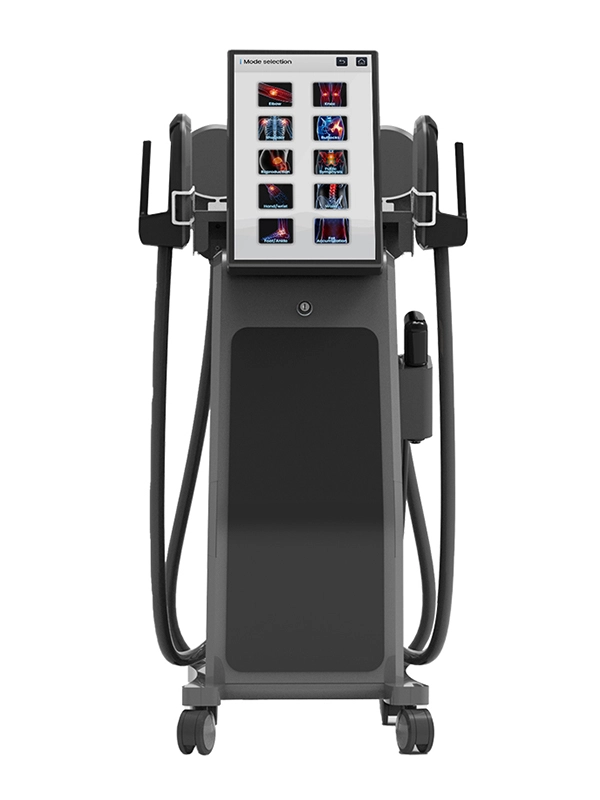
2 in 1 EMS Body sculpt machine cellulite treatment shockwave therapy EMS therapy device EMS machine for muscle stimulation
Goodway's 2-in-1 EMS Body Sculpt Machine utilizes shockwave therapy and EMS technology for effective cellulite reduction and muscle stimulation. This innovative device offers a combined approach to body sculpting, targeting both fat and muscle tone. Experience noticeable improvements with Goodway's advanced shockwave therapy machine.
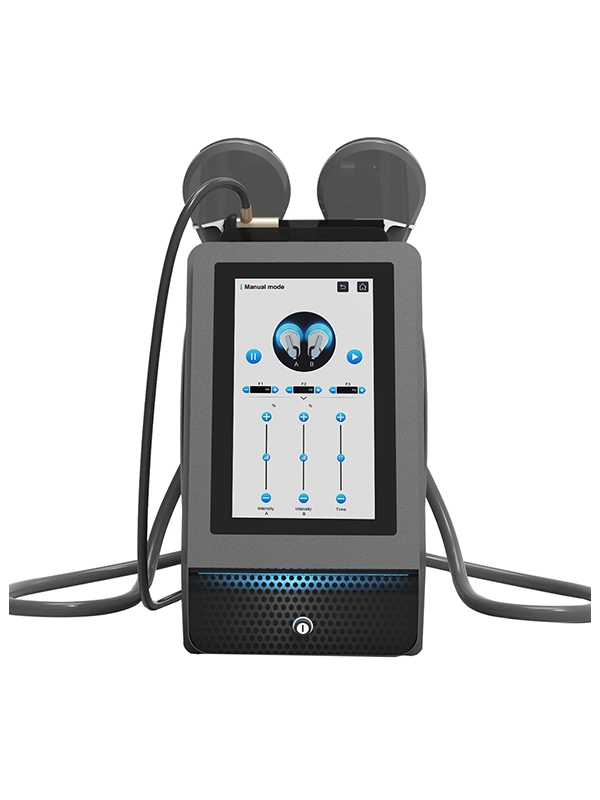
2 in 1 Best EMS beauty device shockwave therapy device body contouring shockwave ems muscle stimulator Machine
Goodway's Shockwave + MES Beauty Device is an advanced dual-therapy system combining shockwave technology for deep-tissue healing—reducing inflammation, relieving arthritis pain, and accelerating recovery—with MES electrostimulation to strengthen muscles without strain. This non-invasive, drug-free solution enhances mobility and rehabilitation, perfect for both clinical and home use.
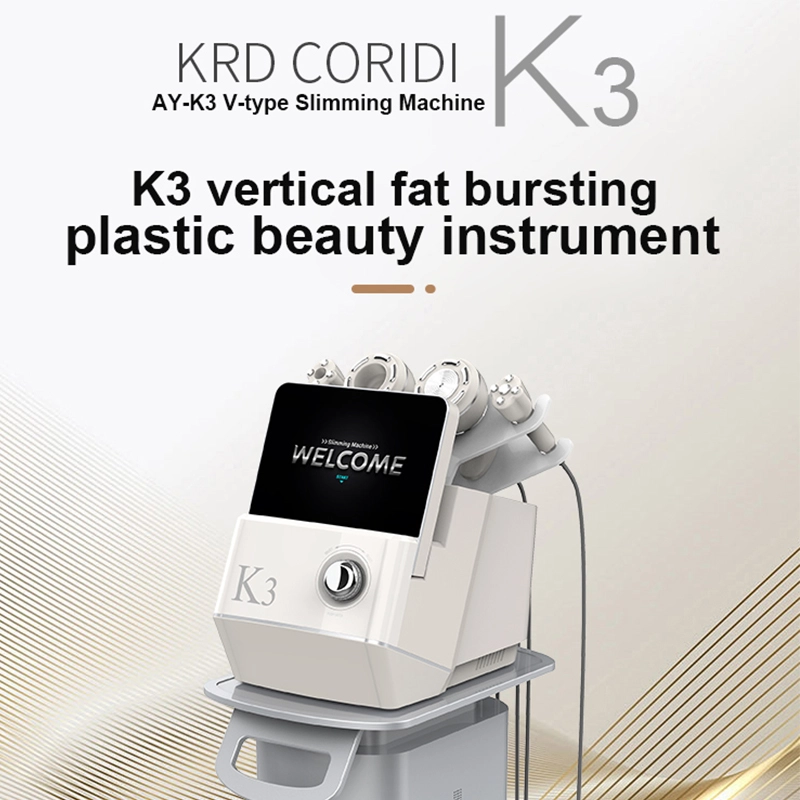
K3 Cavitation machine Achieve Effortless Fat Loss with Our Advanced massage machine
Experience the transformative power of the Goodway's K3 Cavitation Machine. This advanced massage machine targets stubborn fat effortlessly, doubling as an effective cellulite massager. Achieve your desired body contour with ease. Discover unparalleled fat loss results today.
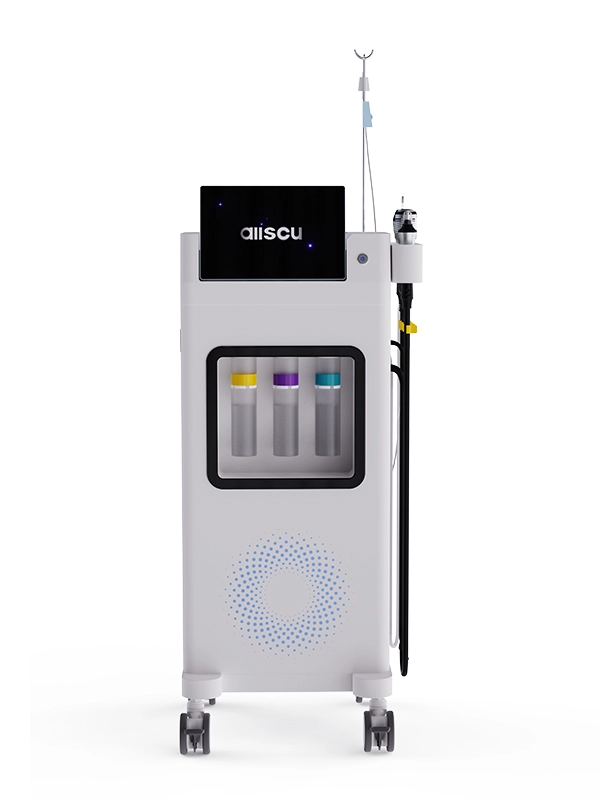
Professional Facial Spa Equipment Aqua Peel Facial Machine for Deep Cleansing and Hydration
Goodway's K8 Hydrafacial Machine is an all-in-one skin rejuvenation system that combines high-pressure deep cleansing, ice hammer pore tightening, plasma acne treatment, diamond microdermabrasion, and ultrasonic pore purification to remove impurities, reduce inflammation, and promote cell renewal—leaving skin smoother, brighter, and healthier.
 Scan QR Code
Instagram